Site evidence
Access, usable area, storage geometry, power proximity, water, expansion, neighbourhood constraints and visible development risks.

The objective is not to collect more data; it is to collect the evidence that can change the project decision.
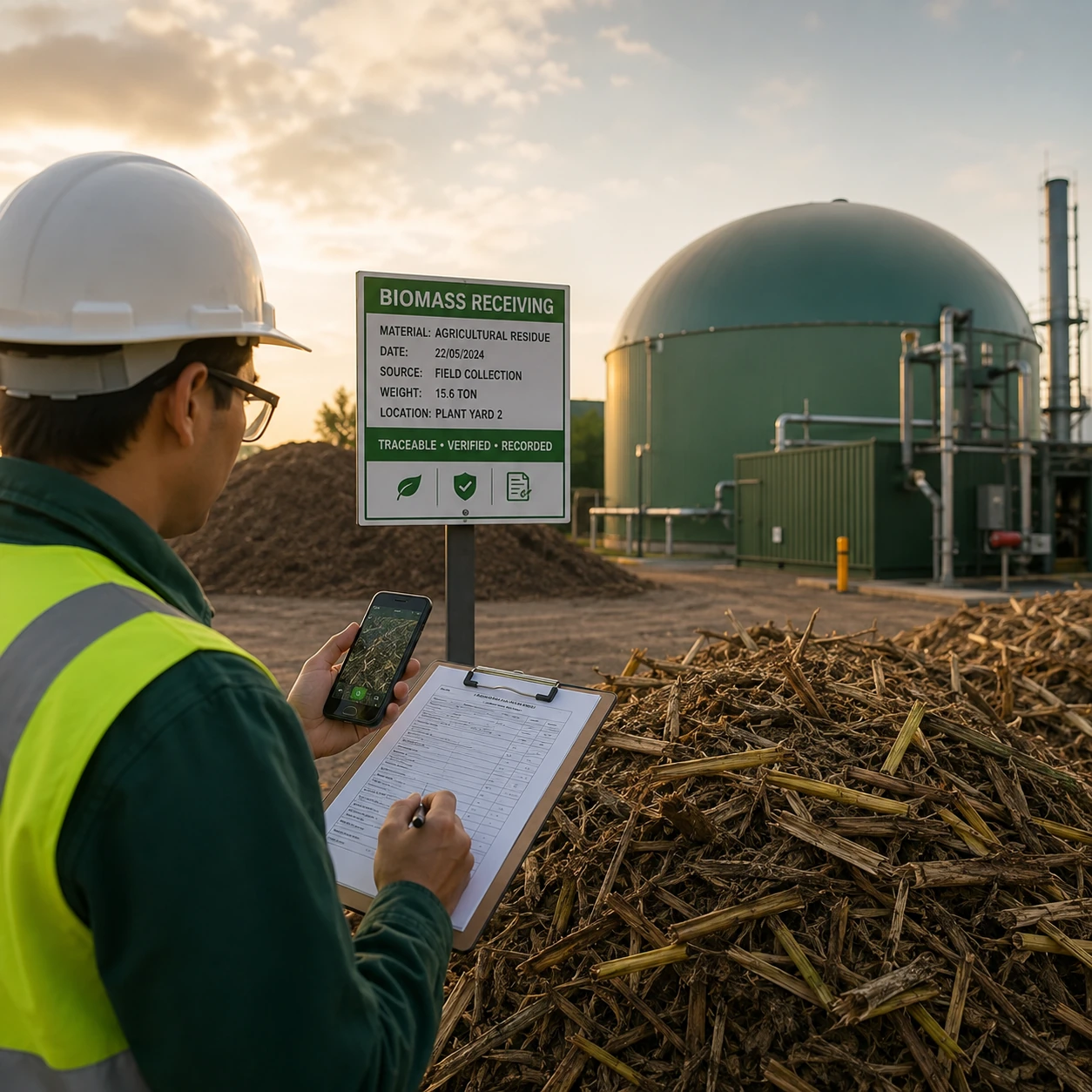
Before visiting a district or calling suppliers, we identify the claims that need verification: expected crop residue, existing utilisation, collection practice, storage behaviour, buyer specification, land readiness, power reliability or transport route.
This keeps the research focused on decision gaps instead of producing a large folder of photographs and generic market information.
Access, usable area, storage geometry, power proximity, water, expansion, neighbourhood constraints and visible development risks.
Crop/industrial source, season, current destination, collection method, quality, price behaviour and supplier willingness.
Actual handling capability, distance, seasonal stock, payment expectation and ability to support repeat procurement.
Current fuel, quality acceptance, testing method, procurement route, delivery location, volume pattern and commercial interest.
Road condition, vehicle type, loading practice, density, lead distance, storage losses and monsoon/seasonal constraints.
Official publications, quotations, laboratory results, land documents and client records that can be retained and referenced.
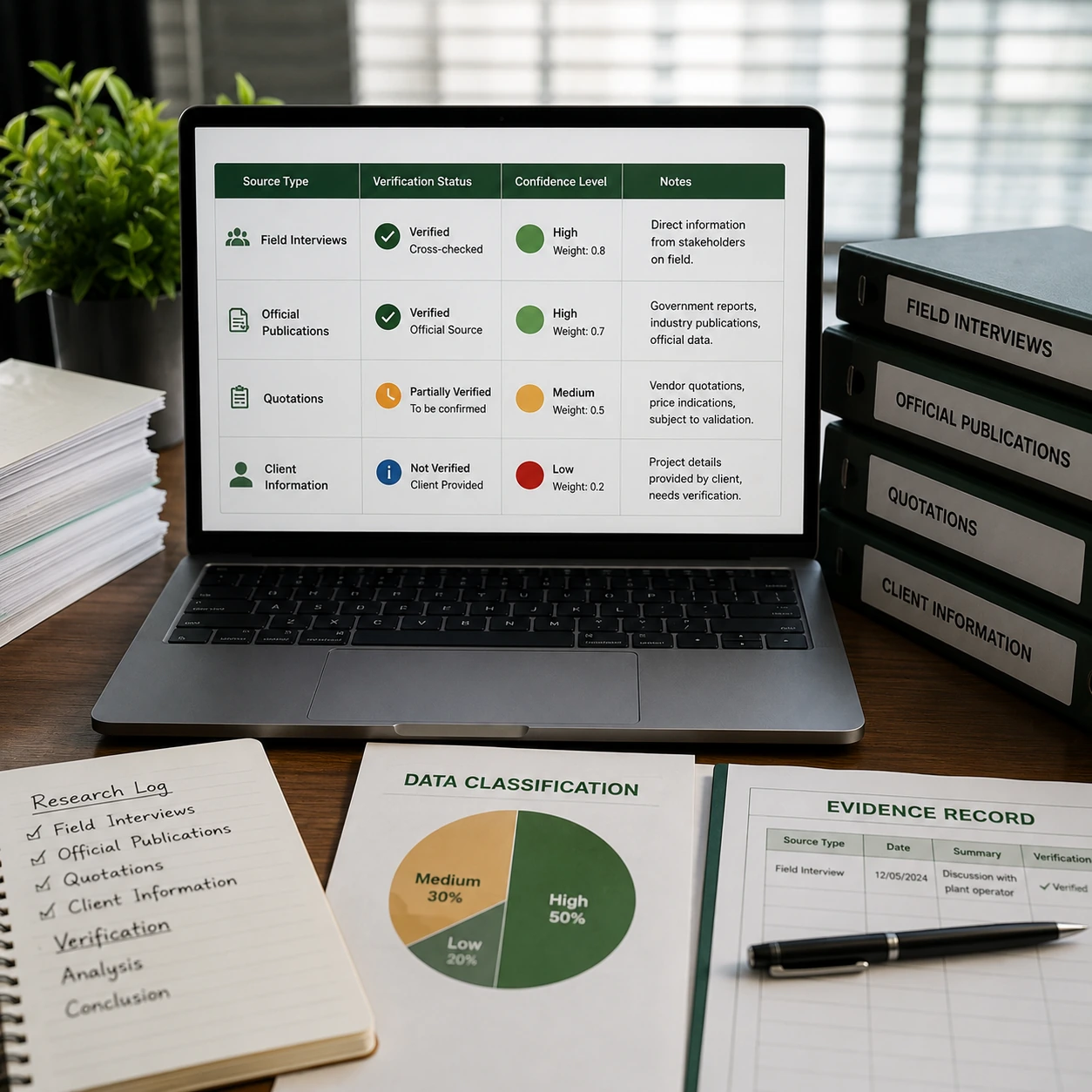
A number with two decimal places can still be weak evidence. The platform records source type, verification status and limitations so reviewers can distinguish field-confirmed information from secondary or indicative assumptions.
Direct measurement, verified official record, signed quotation, test result or corroborated commercial evidence.
Credible secondary data or consistent stakeholder information that still needs project-specific confirmation.
Indicative assumption used to frame a range or sensitivity—not presented as a verified project fact.
Evidence becomes a documented site condition, risk, comparative score or pre-development action.
Field findings become supplier coverage, seasonal storage, feedstock mix and price/radius assumptions.
Buyer evidence becomes product specification, target segment, delivered-price logic and validation actions.
Where certainty remains limited, the financial model receives a range or sensitivity instead of false precision.
Share the district, current assumptions and the claims that still need on-ground verification.