Enquiry & Consultation
Frame the decision the promoter is trying to make.

The workflow separates evidence collection, analysis, decisions and approvals so each stage has a clear purpose and owner.
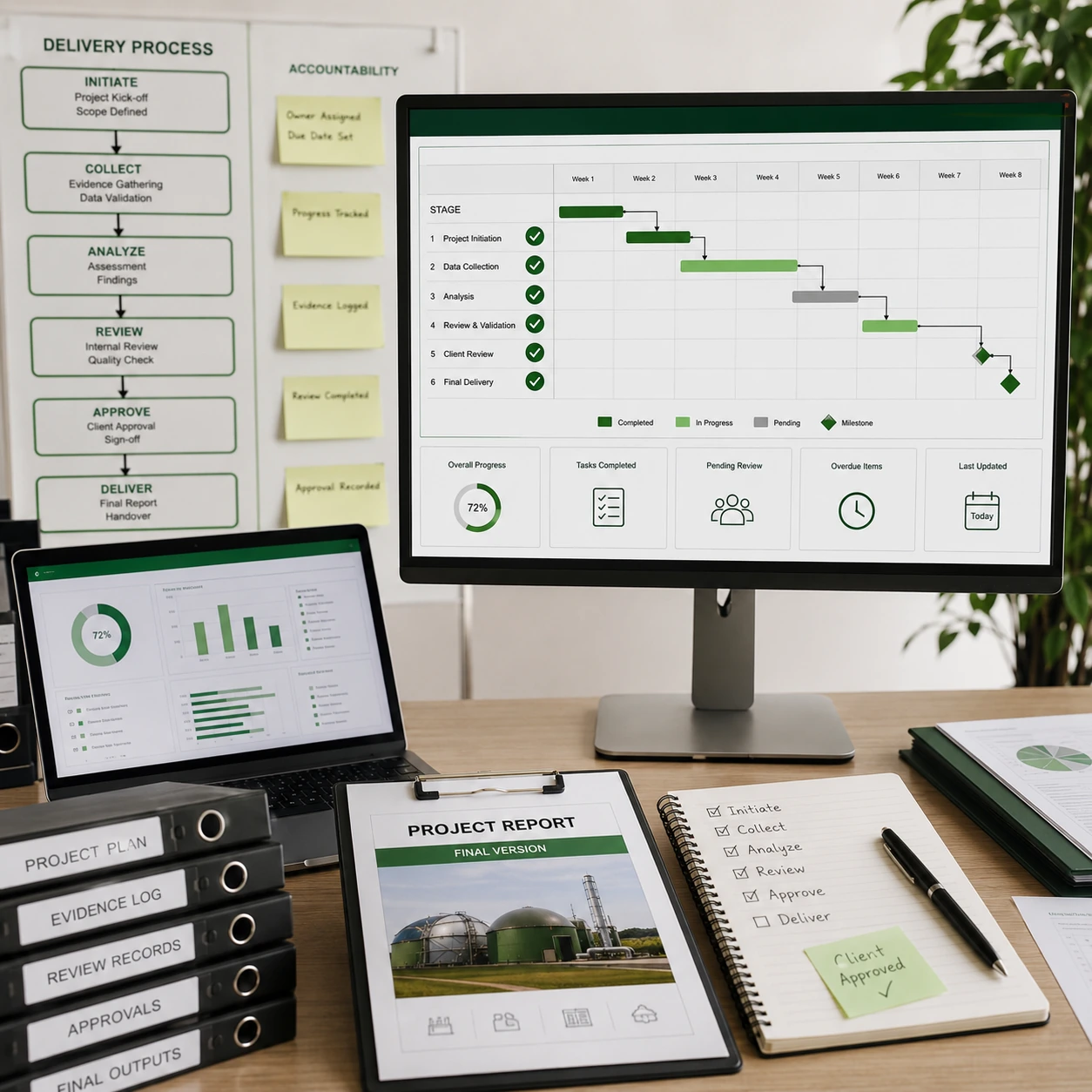
Frame the decision the promoter is trying to make.
Agree what is included, excluded and expected at delivery.
Complete engagement formalities and account setup.
Capture promoter, land, product, capacity and investment inputs.
Identify contradictions, missing evidence and obsolete assumptions.
Turn the data gaps into a field itinerary and stakeholder list.
Record physical constraints, utilities, access, storage and development conditions.
Build a resource view from crop/industrial sources and current utilisation.
Test whether the resource can become dependable procurement.
Translate distance, handling and storage into operational cost and risk.
Validate product specification, demand route and commercial conditions.
Freeze the process basis needed to serve the feedstock and market.
Normalise quotations and assemble the installed project cost.
Translate approved drivers into statements, debt service and returns.
Identify approvals and policy items requiring current verification.
Document dependencies, failure modes and mitigation actions.
Assemble the evidence and decisions into the structured report.
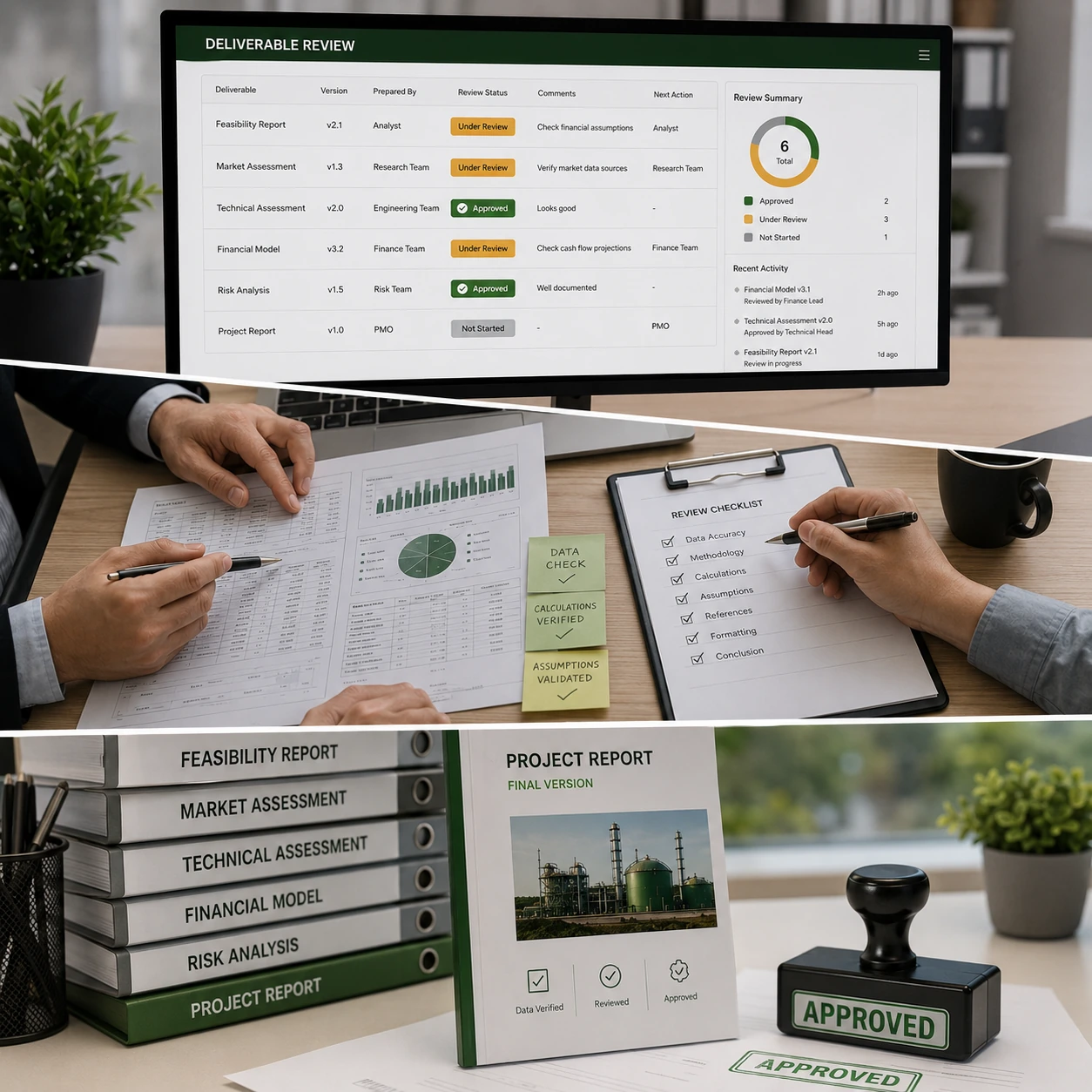
Check source consistency, financial linkage and unresolved contradictions.
Capture feedback against specific sections and complete controlled changes.
Lock the approved version and preserve the delivery history.
Promoter objectives, land documents, quotations, funding assumptions, contacts and decisions must come from authorised client representatives.
We structure the research, test assumptions, document limitations and present conclusions based on the available evidence.
Where a conclusion depends on a sample test, buyer confirmation, revised quotation or site decision, the action must be completed before final reliance.
The promoter/lender/project authority decides whether to accept the risk and proceed to the next investment stage.
See what is complete, in progress, blocked or waiting for a client action.
Approve defined items, submit change requests and respond to consultant updates.
Access authorised research, documents and approved financial snapshots.
Ask questions against the client’s own authorised project context rather than general internet knowledge.
Share your current project stage and the next milestone the team is trying to reach.